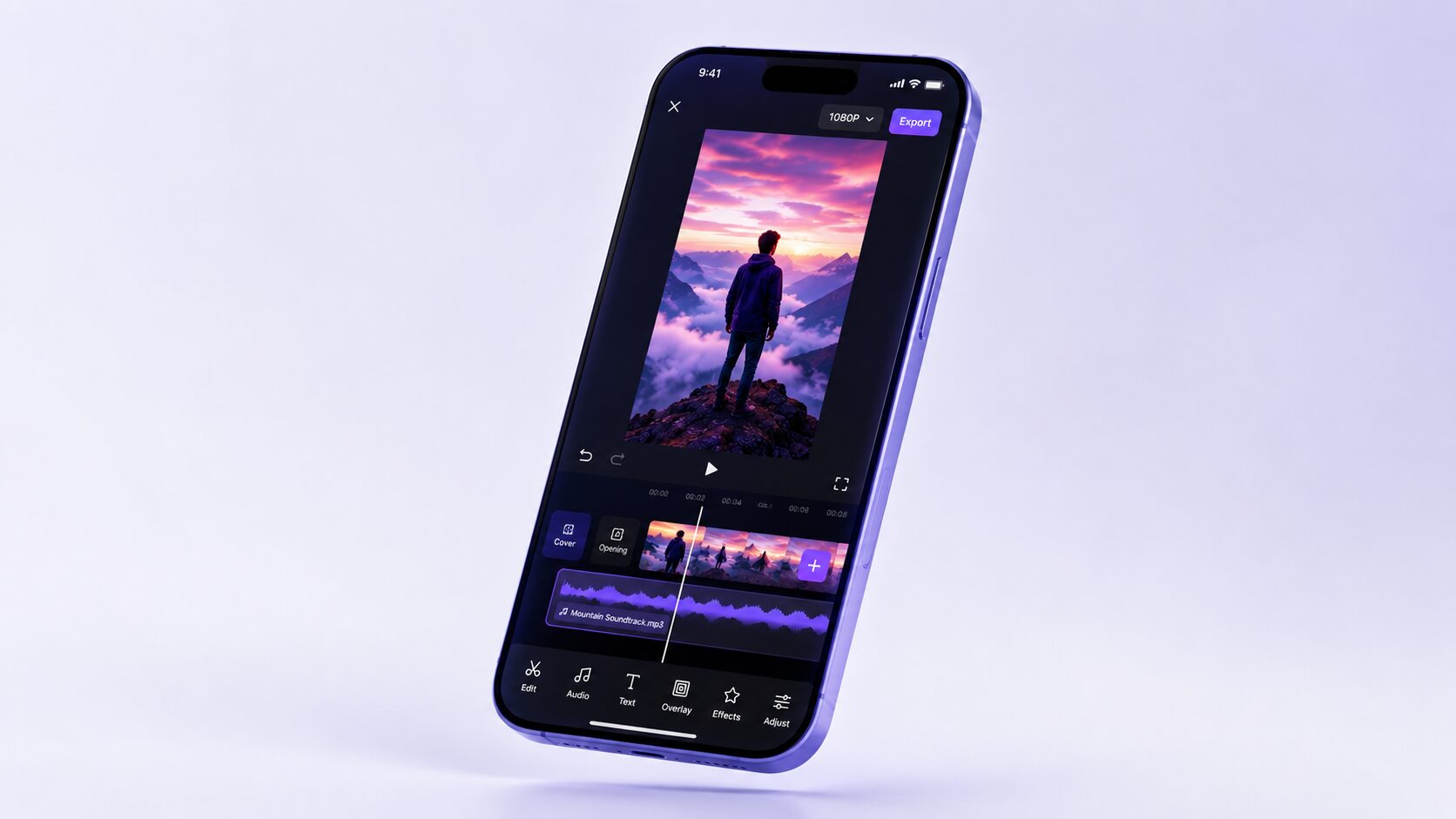
The best social media marketing agency in usa stopped posting static graphics two years ago. Their clients’ results prove why.
Static image posts are dead weight. Flat. Forgettable. Scroll-stopped by nobody. Feeds move fast and algorithms are brutal. A motionless square graphic competes against autoplaying video and loses every single time.
The data is not subtle. Vertical short-form video generates 3x the engagement of static image content across Instagram, TikTok, and YouTube Shorts. Average watch time on vertical video outperforms horizontal formats by 157% on mobile devices. Mobile now accounts for 78% of all social media consumption in the United States.
Social media marketing in the US has a new operating standard. Vertical. Short. Motion-first. Every platform has rebuilt its algorithm to prioritise video watch time over static impressions. Facebook rewards Reels. Instagram buries non-video posts. TikTok built an entire economy on the first three seconds of a clip.
Old-school agencies are still selling monthly graphic bundles. Their clients are invisible.
The playbook has changed completely. This guide shows you exactly what the new one looks like.
Why Brands Look Past Standard Top 10 Social Media Marketing Agency in USA Directories
Most agency directories are not independent research. They are paid placement boards dressed as editorial rankings. A business pays a listing fee, submits a profile, and receives a badge. The ranking algorithm rewards budget, not performance. The businesses reading these lists believe they are looking at merit. They are looking at marketing spend.
This is the first trap smart brand owners learn to avoid.
What Paid Directories Never Measure
No top-ten list measures video completion rate. None tracks cost per follower acquired through original content. None compares template-based agencies against studios producing fully custom video assets. The metrics that actually determine social media growth are invisible inside directory rankings.
The real best social media marketing agency in usa is never competing for a badge. They are competing for client retention through measurable content performance. Their proof lives in analytics dashboards, not award certificates.
Templates Are a Ceiling, Not a Strategy
Generic video templates produce generic results. A Canva animation with a logo swap is not a content strategy. It is a placeholder. Algorithms penalise repetitive visual formats because users scroll past them without stopping. Every platform measures this behaviour and reduces distribution accordingly.
A serious social media marketing agency in the us builds custom video assets calibrated to each platform’s current format preferences. Aspect ratios, caption placement, audio levels, hook duration, and call-to-action timing are all adjusted per platform. This is not cosmetic. It directly determines whether the algorithm pushes content to new audiences or buries it.
The One-Afternoon Video Recording Framework
Producing a full month of short-form video content does not require daily filming. It requires one focused afternoon and a clear structure.
Step 1: Script batching in the morning. Write 20 short scripts before filming begins. Each script covers one specific problem, tip, or insight. Maximum 90 seconds per script when spoken aloud.
Step 2: Single location, three outfit changes. Film all 20 clips in one continuous session. Change your top three times to create visual variety across the batch. Viewers will never know every clip came from the same afternoon.
Step 3: Record in sets of five. Film five clips, review playback, adjust framing or lighting, then continue. This prevents a full session of unusable footage from a fixable technical issue discovered too late.
Step 4: Label and categorise immediately. Sort clips into four content categories directly after filming: educational, promotional, social proof, and engagement-bait. This makes scheduling the entire month a 20-minute task.
Step 5: Schedule with platform-specific captions. Each clip gets a unique caption rewritten for TikTok, Instagram Reels, and YouTube Shorts separately. Same video. Three different caption strategies. Tripled distribution reach from a single asset.
One afternoon. Twenty clips. Thirty days of consistent content.
How to Convert Random Viral Video Views into Trackable Company Leads
A video hitting one million views means nothing without a conversion path attached to it. Views are the entry point. Revenue is the destination. The gap between those two outcomes is a technical infrastructure problem, not a content problem. Most brands go viral and capture nothing because the funnel was never built before the content was published.
Build the tracking system first. Publish the content second.
Why Watch Time Retention Drives Algorithm Distribution
Before mapping views to leads, understand what fuels distribution in the first place. Social algorithms do not reward likes. They reward attention held. A video retaining 80% of viewers through the 30-second mark will be pushed to ten times more accounts than a video collecting thousands of empty likes with 15% retention.
Every major platform measures average percentage viewed, replays, and completion rate as primary ranking signals. Likes and shares are secondary. This means your content strategy must obsess over opening hooks and retention arcs, not vanity engagement numbers.
High watch time generates reach. Reach without a conversion path generates nothing bankable.
The Technical Setup: Views to Verified Leads
Follow this numbered sequence before your next video publishes:
- Install UTM parameters on every bio link: Create unique UTM-tagged URLs for each platform profile. Google Analytics must distinguish traffic arriving from TikTok bio versus Instagram bio versus YouTube description. Without this, all social traffic pools into one unattributable source.
- Use a single-destination link-in-bio tool: Direct all platform traffic to one controlled landing page, not your homepage. The landing page must have one offer, one headline, and one form. Multiple options kill conversion rates immediately.
- Fire a conversion event on every form submission: Google Tag Manager must trigger a confirmed lead event the moment a form is submitted. This data feeds back into Meta and TikTok ad platforms, training their algorithms to find more users matching your converter profile.
- Set up scroll-depth tracking on your landing page: Identify exactly where visitors abandon the page. If 70% of traffic drops off before reaching your form, the page structure requires immediate revision before more video traffic is sent to it.
- Connect phone call tracking to video campaigns: Assign unique trackable phone numbers to each platform’s landing page. Inbound calls generated by TikTok content must be separated from calls generated by Instagram content to calculate true cost per lead by channel.
- Build a weekly retention-to-revenue report: Map average video watch time percentage against that week’s form submission volume. This single report reveals which content formats are genuinely driving pipeline versus which are generating hollow reach metrics.
Close the Loop Every Week
Viral reach without attribution infrastructure is brand awareness with no return. Close the loop between every view and every lead source, and your content budget becomes a measurable revenue investment.
Core Content Distribution Workflow for Small Businesses
Creating great vertical video is only half the battle. Distribution discipline determines whether that content generates leads or disappears into the algorithm. Most small businesses shoot strong content and then post inconsistently, caption lazily, and miss every follow-up opportunity that the platform hands them for free.
This workflow closes every gap between content creation and client acquisition.
Pre-Publishing Checklist: Before You Post Anything
Complete every item below before a single video goes live across any platform:
- Aspect ratio confirmed at 9:16: Every video must be filmed and exported in full vertical format. Cropped horizontal footage performs poorly on all three platforms and signals low-quality content to the algorithm
- Resolution minimum 1080×1920: Blurry or compressed video is suppressed by TikTok, Instagram, and YouTube Shorts before it reaches a meaningful audience
- First three seconds reviewed on mobile only: Watch your video on a physical phone screen before publishing. Desktop previews lie. If the hook does not stop a thumb within three seconds on a 6-inch screen, re-edit before posting
- Captions burned directly into video: Never rely on auto-generated platform captions. Burn your own text overlays during editing. Eighty percent of social video is watched on mute
- Cover frame selected manually: Choose a custom thumbnail that shows a human face or bold text. Auto-selected cover frames are almost always the worst possible frame in the clip
Cross-Platform Posting Sequence
Post in this exact order to maximise early algorithm momentum on each platform:
- TikTok first: TikTok’s algorithm surfaces new content to a test audience within the first 30 minutes. Post here first, monitor the initial watch time retention rate, and confirm the hook is holding attention before pushing to other platforms
- Instagram Reels second: Post within two hours of your TikTok upload. Write the Instagram caption independently. Do not copy and paste the TikTok caption. Instagram audiences respond to slightly warmer, more conversational language than TikTok audiences
- YouTube Shorts third: Upload within four hours. YouTube Shorts rewards keyword-rich titles and descriptions more heavily than TikTok or Instagram. Write a 150-word description using your primary service keyword naturally across three to four sentences
Writing Human Captions That Convert
Captions are not decoration. They are a direct conversion tool. Follow these rules without exception:
- Open with a one-line statement that names a specific problem your viewer is experiencing right now
- Write at a sixth-grade reading level. Short words. Short sentences. No industry jargon
- End every caption with a single, specific instruction. Not “check the link in bio.” Instead write: “Send us the word LEADS and we will send you the full breakdown directly”
- Keep Instagram and TikTok captions under 150 words. YouTube Shorts descriptions can run longer for search visibility
Automated Direct Message Response Triggers
This is the highest-leverage lead capture tool available to small businesses on social media right now. It costs nothing to set up and works while you sleep.
- Instagram: Use Meta Business Suite to create keyword-triggered auto-responses. When any user comments or messages the word you specified in your caption, they instantly receive a pre-written DM containing your offer link, your lead form URL, or your booking page
- TikTok: Enable TikTok’s auto-reply feature in creator tools. Set a keyword trigger matching your caption call to action. Every comment containing that word fires an automatic response with your contact link
- YouTube Shorts: YouTube does not support comment auto-triggers natively. Compensate by pinning a comment immediately after publishing containing your full offer link and a one-line call to action
Your Business Cannot Afford to Wait
Every week without a structured distribution workflow is a week your content works at 20% of its potential. The video assets you already have sitting on your phone are generating zero leads right now because the funnel behind them was never built.
Set up your auto-reply triggers today. Fix your caption structure on the next post. Test your landing page on a mobile screen before you send another viewer to it.
Short-form video is the most powerful free lead generation tool available to small businesses in the United States right now. The businesses capturing that opportunity are not producing better content than you. They are simply distributing smarter, following up faster, and converting attention into booked appointments before the algorithm moves on.
Build the system once. Let it work every single day.
Here’s the truth nobody wants to say out loud. The algorithm you mastered last quarter has already changed. Video platforms reward consistency, not perfection. The businesses winning on social media right now aren’t the ones with the biggest budgets. They’re the ones showing up every single week with useful, honest content. Today, map out your first three video topics. Write them down. Commit to a posting date for each. That’s it. That’s your starting point. Or skip the guesswork entirely and reach out to AptKlick. We’ll build a custom video workflow that fits your business, your budget, and your audience starting now.
Short content performs best. Seven to fifteen seconds works well for TikTok and Reels for reach, while thirty to sixty seconds builds trust. Hook viewers in the first two seconds. Test both formats and prioritise watch time over raw views.
A good starting split is 60 percent paid and 40 percent organic. Even small budgets of 300 to 500 dollars per month can deliver results if targeting is done well. Scale based on performance and ROI.
Three to five posts per week is enough. Consistency matters more than frequency. Low quality daily posts can hurt performance. Focus on sustainable quality content.
It depends on your audience. Instagram and TikTok are strong for visuals and younger users. Facebook works well for local services and older demographics. LinkedIn is best for B2B. Start with one platform first.
Yes. Posting when your audience is active improves early engagement. Early engagement helps the algorithm distribute your content further. Use analytics to find peak times.
Yes. A smartphone is enough to start. Authentic content often performs better than highly polished ads. Focus on strong hooks and clear calls to action.
Track leads, conversions, website clicks, and cost per result. These metrics show real business impact. Vanity metrics like followers are not enough.
Run ads for at least seven days. Algorithms need time to optimise. After that, evaluate cost per result and engagement before making decisions.
Yes. Video is the most effective content format today. Start simple with one short video per week. Improvement comes with consistency and practice.
Watch time, shares, saves, and comments drive distribution. The more people engage deeply with your content, the more the algorithm promotes it.
Short content performs best. Seven to fifteen seconds works well for TikTok and Reels for reach, while thirty to sixty seconds builds trust. Hook viewers in the first two seconds. Test both formats and prioritise watch time over raw views.
A good starting split is 60 percent paid and 40 percent organic. Even small budgets of 300 to 500 dollars per month can deliver results if targeting is done well. Scale based on performance and ROI.
Three to five posts per week is enough. Consistency matters more than frequency. Low quality daily posts can hurt performance. Focus on sustainable quality content.
It depends on your audience. Instagram and TikTok are strong for visuals and younger users. Facebook works well for local services and older demographics. LinkedIn is best for B2B. Start with one platform first.
Yes. Posting when your audience is active improves early engagement. Early engagement helps the algorithm distribute your content further. Use analytics to find peak times.
Yes. A smartphone is enough to start. Authentic content often performs better than highly polished ads. Focus on strong hooks and clear calls to action.
Track leads, conversions, website clicks, and cost per result. These metrics show real business impact. Vanity metrics like followers are not enough.
Run ads for at least seven days. Algorithms need time to optimise. After that, evaluate cost per result and engagement before making decisions.
Yes. Video is the most effective content format today. Start simple with one short video per week. Improvement comes with consistency and practice.
Watch time, shares, saves, and comments drive distribution. The more people engage deeply with your content, the more the algorithm promotes it.